
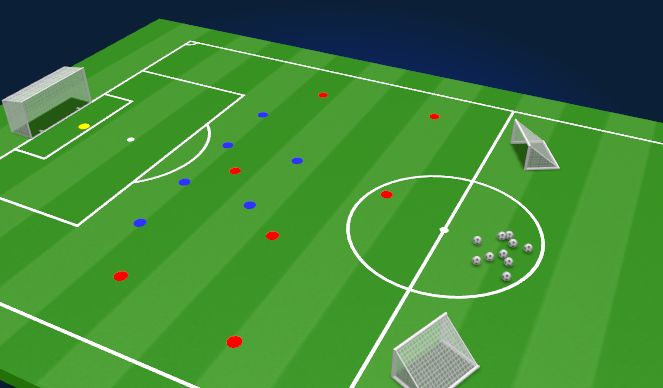
In Ligue 1, attacking overloads are not just a stylistic preference but a structural response to compact defensive blocks. Many teams face opponents who defend with narrow lines and limited pressing, forcing attacks to become positional rather than transitional. Overloads—deliberately creating numerical superiority in specific zones—emerge as a practical solution. When executed well, they stretch defensive responsibility, delay pressure, and open passing lanes that would not exist in balanced structures.
Why overload-based attacks fit the defensive reality of Ligue 1
Ligue 1 matches often feature mid-to-low blocks, especially outside the top-tier possession sides. Defenders prioritize protecting central zones, accepting pressure in wide areas. This creates a natural incentive for attacking teams to stack players on one side or between lines, forcing defenders into uncomfortable decisions. The cause is structural: compact defending reduces space, and overloads artificially recreate it.
The outcome is not immediate chaos but gradual disorganization. Each additional attacker in a zone increases cognitive load on defenders, who must decide whether to hold shape or step out. The impact shows up later in sequences, when marking assignments slip and reaction times slow.
Overloads are built through movement timing, not fixed positioning
A common misunderstanding is that overloads come from simply placing more players in one area. In reality, effective overloads depend on synchronized movement. If attackers arrive too early, defenders adjust. Too late, and the advantage disappears. Ligue 1 teams that rely on overloads usually disguise them until the last moment.
The timing creates uncertainty. Defenders read initial shapes, not future ones. By rotating midfielders wide or pushing fullbacks inside only after the ball has moved, teams manufacture temporary numerical advantages that defenders cannot pre-organize against.
The zones where overloads most often lead to goals
Overloads can exist anywhere, but goal creation tends to come from specific areas because of angle, distance, and defensive priority. Ligue 1 teams repeatedly target the same zones because the payoff is proven, not theoretical.
Before listing them, it is important to understand that these zones are chosen because they force defenders to face their own goal or defend diagonally—both situations increase error probability.
Common overload zones that lead to scoring chances:
- Half-spaces just outside the penalty area
- Wide channels near the corner of the box
- Central pockets behind the first midfield line
- The edge of the six-yard box during cutback sequences
These zones matter because overloads there compress defenders toward goal while still allowing attackers to face forward. The interpretation is clear: overloads succeed when they combine numerical superiority with threatening body orientation, not just crowd density.
The role of the “free man” in overload-based attacks
Overloads are not designed to score directly; they are designed to free someone else. The presence of extra attackers forces defenders to commit, and the real advantage appears when one attacker remains unmarked. This “free man” is often the eventual shooter or final passer.
What strengthens this mechanism is role clarity. Ligue 1 teams that use overloads effectively usually predefine who attacks space and who stays available. Without this clarity, overloads become congested clusters that slow play instead of accelerating it.
When overloads fail despite numerical advantage
Overloads are vulnerable to specific defensive responses. The most common failure occurs when defenders do not chase the ball but protect passing lanes instead. In that case, numerical superiority does not translate into progression.
Another failure case appears when ball speed drops. Overloads require rapid circulation; slow touches allow defenders to recover shape. Fatigue also plays a role—late in matches, overloaded attacks often become predictable because players lack the explosiveness to rotate positions quickly.
Conditional scenario: overloads against aggressive pressing teams
Against high-pressing opponents, overloads can invert their purpose. Instead of creating advantage, they concentrate risk. If possession is lost, multiple attackers are bypassed at once. In these situations, Ligue 1 teams often reduce overload frequency or shift them deeper, using them as press-resistance tools rather than chance-creation mechanisms.
Reading overload patterns for applied match interpretation
From an educational perspective, overloads are valuable because they explain why certain chances keep appearing. When a team repeatedly creates 3v2 or 4v3 situations on one side, it signals intent, not randomness. That intent shapes future probability.
When match flow begins to tilt and overloads become more frequent in advanced zones, the market often reacts emotionally to possession dominance. In those moments, observation leads to implication before reference: when checking live prices on a football betting website such as ufabet ทางเข้า, the key is to distinguish between sterile possession and overload-driven pressure. Overloads that consistently produce cutbacks or central entries usually precede high-quality chances, while overloads that end in recycled crosses rarely change expected outcomes. The analytical edge comes from recognizing the difference before it is fully reflected in the betting interface.
Structural indicators that an overload strategy is sustainable
Not all overload-heavy teams can maintain the approach for 90 minutes. Sustainability depends on spacing discipline and rest defense. Ligue 1 teams that succeed long-term usually keep at least two players positioned to counterpress immediately after losing the ball.
This matters because defenders react differently when they know turnovers will be punished. If an overload is protected, defenders hesitate to step out aggressively, increasing its effectiveness over time. Without that protection, defenders become bolder, and the overload loses its deterrent effect.
Summary
Ligue 1 teams use attacking overloads as a structural response to compact defending, not as a stylistic flourish. The tactic works through timing, movement, and zone selection rather than sheer numbers. Overloads succeed when they free a clearly defined attacker and fail when ball speed drops or defensive lanes remain protected. Their real value lies in shaping match patterns and probability, especially when interpreted beyond surface-level possession statistics.