
A healthy smile serves as both a key part of your appearance and what helps you carry out mission-critical tasks in your everyday life. Losing a tooth may severely damage a person’s confidence, their ability to talk and eat and their overall oral health. Fortunately, advances in dental technology have revolutionised the treatment of lost teeth. This article emphasises how modern implant dentistry is all about exactitude, personalisation, and long-term acceptance, allowing for function and aesthetics in patients’ restorations from treatment planning all the way through to the final restoration.
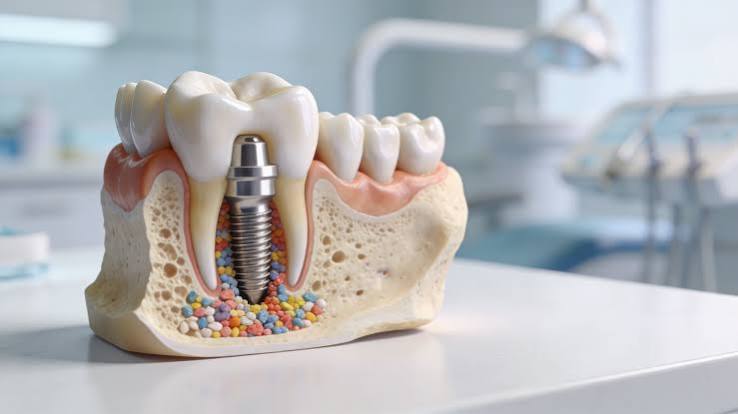
When it comes to replacing teeth, the most reliable solution of all is dental implants. Unlike other options, implants are engineered to bond with the jawbone, thereby providing an unwavering support system for crowns, bridges or full-arch restorations. This allows patients to benefit from a natural appearance while preserving the tooth and bones.
The Importance Of Precision In Implant Dentistry
Comprehensive planning is the first step towards successful implant treatment. Each patient’s oral health care needs, bone density and restorative desires are unique. Implant treatment guided by precision takes these aspects into account before doing any procedure.
Diagnostic devices are capable of evaluating jawbone quality, revealing anatomical structures, and locating the proper position for an implant. Planning, when done carefully, contains the risks and helps us come near to something predictable. Using a highly personalised approach, dental teams can make certain that implants work and look great.
This not only helps avoid potential complications but also makes the procedure more comfortable for the patient. Care plans will be designed better because procedures are clearly mapped out, getting patients through the restoration process more efficiently and with less adjustment.
The team at Sydney Dental Implants understands the importance of integrating state-of-the-art technology with customised treatment planning to provide solutions that match the specific requirements of each patient and ensure predictable results.
Restoring Function Beyond Appearance
Unfortunately, most of us consider dental implants primarily for cosmetic enhancement in our smile when the truth is that they offer much more than just this advantage. However, if you are missing teeth, chewing can be difficult and restricts the type of food you can consume. Over time, these challenges can affect a person in terms of their nutrition and overall health.
They are the sole treatment that substitutes tooth roots, restoring a comfortable and effective biting and chewing pattern. This allows patients to have a greater variety of foods without the need or pain of dismantling dental plates.
Having a full set of teeth also aids in speech. This can change how words sound, particularly if the individuals don’t have teeth. Implant placement will allow you to participate fully in speech, enabling social interaction or work without having to worry when interacting with others.
Protecting Jawbone Health
The jawbone holds one of the most important benefits of dental implant support. When a tooth is lost, the bone has no stimulation of chewing force on it because there is no longer a functional root in the underlying bone. The result is a loss of bone with the passage of time.
The implants serve as an artificial tooth root that transmits pressure onto the jawbone when we use them daily. This stimulation is critical for preserving bone density and keeping facial changes related to tooth loss at bay.
One thing that many patients are unaware of is how quickly replacing missing teeth can help maintain facial structure. Good bone volume helps keep your facial appearance looking fuller and is crucial for oral health in the long term.
Looking Toward Long-Term Success
Dental implants are designed to serve as a long-term tooth replacement. Nonetheless, achieving success in the long term requires appropriate planning and placement, as well as maintenance of oral hygiene. Good hygiene conducted by a patient and regular visits ensure that implant patients will be able to benefit from their implants for many years.
Precision-directed implant therapy approaches continue to elevate the standard of contemporary restorative dentistry. With the proper diagnostics, a customised plan of action and innovative technologies, dentists can provide patients with confidence in restoring their smiles. The outcome is greater than a resurfaced look. It is a solution created with the potential for long-term success that gives patients back the comfort, function and quality of life.